The Combat Diver: Where Engineering Meets Silence
The U.S. Army Combat Diver qualification is one of the most demanding courses in the entire military training system. It requires mastery of underwater navigation, combat swimming, closed-circuit diving, underwater demolitions, and the ability to perform precision engineering operations in zero-visibility environments — often at night, often under hostile conditions.
As a 12 Delta (Combat Engineer), my primary MOS combined traditional combat engineering — breaching, emplacing obstacles, route clearance, bridge construction — with the specialized underwater dimension of Combat Diver operations. This meant that I was responsible for applying engineering principles in the one environment where a design flaw cannot be corrected after you're already 30 meters down.
"What the military taught me is not discipline in the way civilians imagine it — rigid and mechanical. It taught me that discipline is a form of respect for the complexity of reality. You are not fighting nature underwater; you are negotiating with it."
The Mathematics of Diving
Military diving is a deeply mathematical practice. Decompression theory, gas laws (Boyle's, Henry's, Dalton's), nitrogen narcosis thresholds, current calculations, tide prediction, and underwater navigation via compass and distance all require real-time computation under physical and psychological stress. This early, embodied relationship with applied mathematics directly shaped my approach to machine learning: algorithms, like diving plans, must account for failure modes before they occur.
What Service Gave Me
My military service gave me three things that no academic program can instill. First, a tolerance for ambiguity under pressure — the same mental posture required to debug a failing model at 2 a.m. or to defend a thesis before a hostile committee. Second, a systems-level instinct — the ability to see how individual components interact within a larger whole, whether that whole is a bridge, a unit, or a neural network. Third, a moral seriousness — a deep, lived understanding that technology — like ordnance — is morally neutral until a human decides how to use it.
Photo Gallery
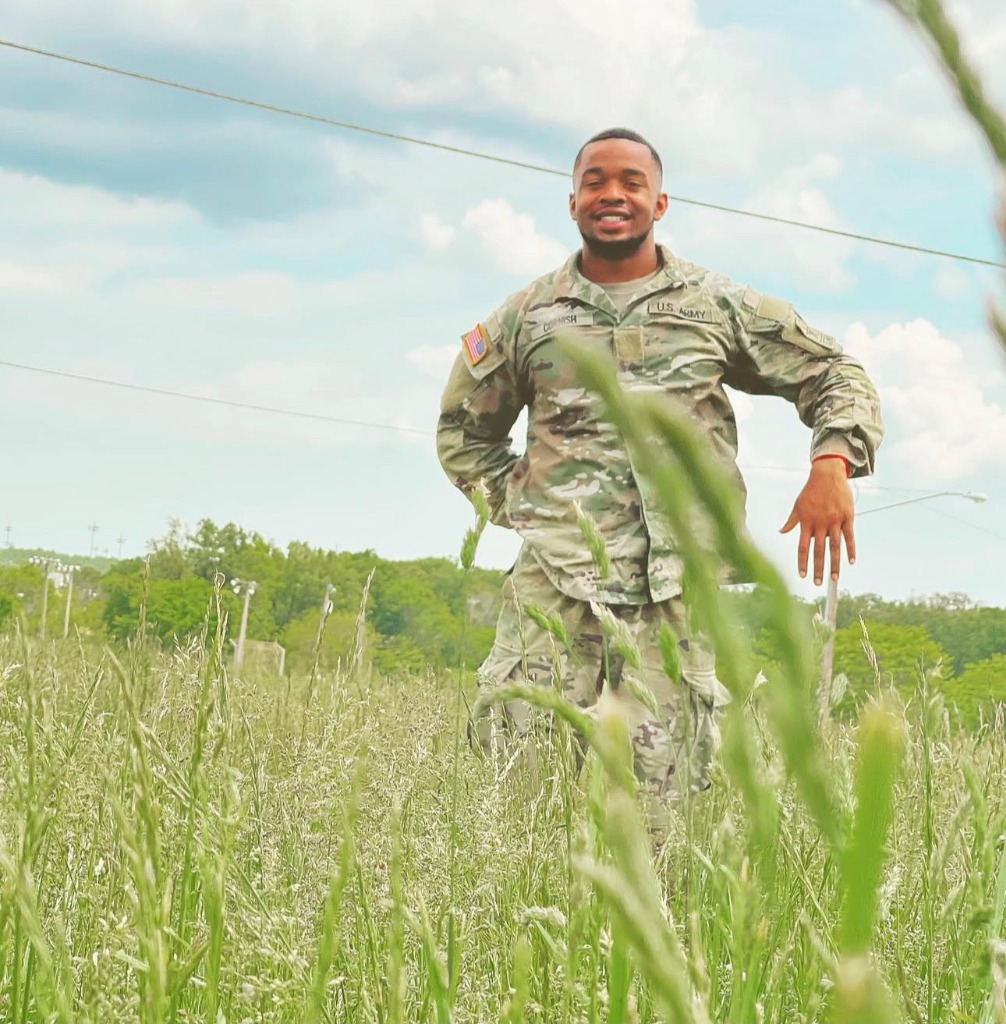
Military service photos from my time as a 12 Delta and Combat Diver.
Dive qualification, underwater operations
Combat engineer field operations